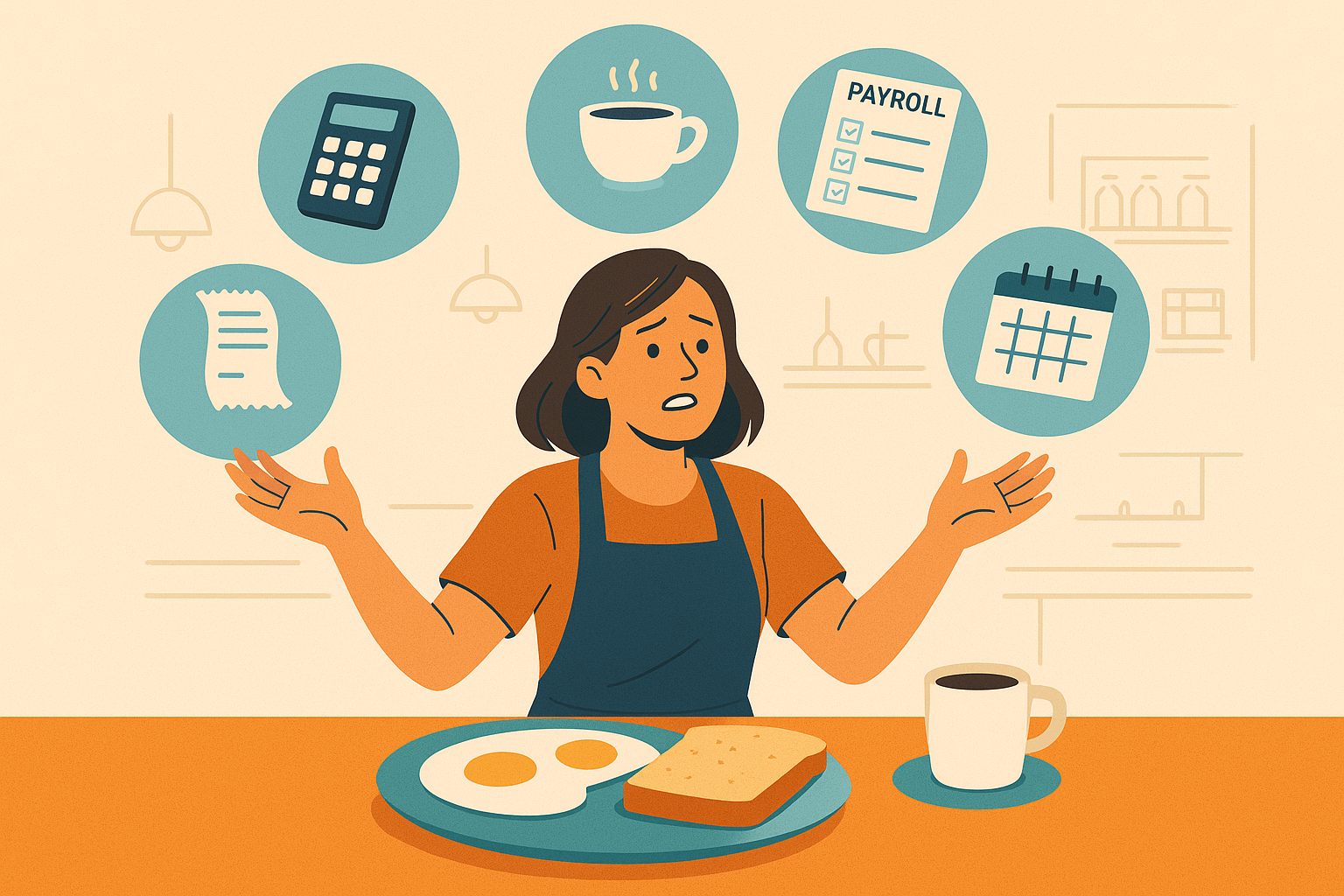
Where Did Your Money Go? 5 Numbers Every Business Owner Should Check Each Month

You have finished a busy month. The café was full, your online orders were steady, or your client work kept arriving. Your business bank balance looks healthy, yet you are still wondering: did you actually make a profit?
It is a familiar feeling. Money has come in, bills have gone out, and the balance has changed, but the story behind those numbers is unclear.
This does not mean you are bad at business. It usually means your bookkeeping is showing you transactions without giving you a clear monthly picture. The good news is that you do not need to become an expert overnight. Checking five numbers consistently can help you understand what is really happening.
Why a healthy bank balance can be misleading
Your bank balance tells you how much money is in your account today, not how much belongs to you, how much your business has earned, or what needs to be paid soon.
That balance might include:
- VAT collected from customers which may need to be paid to HMRC
- money set aside for payroll
- funds needed for upcoming supplier invoices
- customer payments received for work not yet delivered
- cash from invoices still unpaid elsewhere in the records
Cash and profit are not the same thing
Cash is money moving in and out. Profit is what remains after the income and costs that belong to a period are taken into account.
A business can be profitable but short of cash (because customers have not paid yet). It can also have plenty of cash but little profit (because that money relates to loans, VAT, or earlier sales).
Your numbers are telling a story. You simply need to read the right parts of it.

Turnover is not profit
Turnover is the total value of your sales for a period, before business costs are taken away (also called revenue or sales income). Profit is what is left after allowable business expenses have been deducted from relevant sales income.
A simple illustration:
- Sales for the month: £10,000
- Business expenses for the month: £6,500
- Estimated profit: £3,500
Calculation: £10,000 − £6,500 = £3,500 estimated profit.
This is an illustration, not a tax calculation. Actual profit can be affected by VAT treatment, timing, stock, payroll, finance costs, drawings, and legal structure.
The key point is simple: £10,000 in sales does not mean you have £10,000 available to spend.
The five numbers to check every month
Use your monthly profit and loss report, bank records, and bookkeeping system to review these figures consistently.
1. Total sales or turnover
This is the total value of sales recorded for the month. It helps you see whether income is growing, falling, or changing with the seasons.
A café might compare weekday and weekend trading. A freelancer may compare completed projects or recurring retainers.
Check:
- the sales figure agrees with your till, invoices, payment platforms, or ecommerce records
- all sales for the month are included
- there are no duplicated payments or wrong-period entries
- VAT has been treated correctly where relevant
Ask yourself:
- Is this month typical?
- Which products or services generated the most income?
- Are you relying too heavily on one customer or income source?
- Are sales increasing while margins shrink?
Remember, turnover is not profit. It is the top line, and only part of the picture.
2. Business expenses
These are the costs of generating sales and running the business.
They usually fall into two broad groups:
- Regular costs such as rent, subscriptions, insurance, software, and recurring professional fees
- Variable costs such as stock, packaging, card fees, delivery charges, casual staffing, and increased marketing spend
Check staff and payroll costs are recorded correctly. For many businesses, payroll is one of the largest monthly expenses and needs to sit in the right period.
Check:
- you have recorded business purchases paid from a personal account
- receipts and invoices have been kept
- spending has been categorised consistently
- supplier bills relating to the month have been included
- personal spending has been removed from business records
Capturing expenses properly helps produce a more accurate profit figure. It does not automatically mean every expense reduces your tax bill. Whether a cost is allowable depends on the circumstances.

3. Estimated profit
This gives you a quick view of whether the business earned more than it spent.
The basic calculation is:
Sales − business expenses = estimated profit
Look at both the current month and the year-to-date position. One unusually strong month can hide a weak quarter, and one quiet month may not be a concern if the wider trend is healthy.
Consider whether business and personal money are mixed. Personal spending passing through the business account makes it harder to see true costs. Keeping separate accounts and recording drawings or payments correctly gives your figures a clearer shape.
A busy month is not always a profitable month. More sales may also mean more stock, wages, delivery costs, refunds, or marketing.
4. Cash available after committed costs
This is the amount you may have left after considering costs you already know are coming.
Start with your current business bank balance, then consider:
- unpaid customer invoices
- supplier bills due soon
- payroll and related payments
- rent, subscriptions, and finance payments
- VAT or tax amounts that need to be reserved
- any other committed business costs
This is different from profit. A profitable invoice may not have been paid yet, and a bank balance may include money that is not genuinely available to spend.
This is not a formal cash-flow forecast. It is a practical monthly sense-check: if the known payments went out, how comfortable would the business be?
If the answer is “not very”, you have useful information early enough to follow up invoices, delay non-essential spending, or plan ahead.
5. Tax and VAT reserve
If you are VAT-registered, review how much VAT has been collected on sales and how much may be reclaimable on eligible purchases. The resulting position can help you understand what may need to be paid or reclaimed when your VAT return is prepared.
Also review the amount held for future tax liabilities. The right amount varies according to business structure, profit, income, VAT position, and personal circumstances. There is no universal percentage that works for everyone.
Check:
- your year-to-date profit
- your current VAT position, if registered
- relevant payment and filing dates
- whether reserved funds are kept separate where practical
Ask yourself:
- Do I understand what this reserve is for?
- Have I treated money set aside for tax or VAT as spendable cash?
- Do I need guidance on any figures or treatment that are unclear?
A reserve is not a guarantee of the final amount due. It is simply a way to avoid treating every pound in the bank as available spending money.

A simple seven-step monthly bookkeeping routine
Set aside a regular time each month, ideally before the next month becomes too busy.
- Collect sales records from invoices, tills, payment platforms, and ecommerce systems.
- Upload or organise purchase invoices and receipts.
- Reconcile the business bank account and card accounts.
- Check payroll, supplier bills, and recurring payments.
- Run a profit and loss report for the month and year to date.
- Review cash available after committed costs, plus your tax and VAT reserve.
- Write down one action, such as chasing an overdue invoice, reviewing a subscription, or checking an unusual expense.
Xero, QuickBooks, and Sage can all support digital record keeping when they are set up and used appropriately. The software can organise the information, but you still need sensible processes and accurate records behind it.
Signs you may have lost visibility
If any of these sound familiar, you may have lost a clear view of what is happening in your business:
- you are unsure how much you sold last month
- you avoid looking at your business account
- you do not know whether your latest month was profitable
- receipts are building up in a drawer, inbox, or bag
- you are using personal money to cover regular business costs
- you cannot easily identify overdue invoices
- tax or VAT deadlines regularly arrive as a surprise
- you are making decisions based on your bank balance alone
None of these signs mean you have failed. They are signals that your business has grown or changed, and your financial routine needs to catch up.
How monthly bookkeeping creates clarity and confidence
When your bookkeeping is up to date, the figures become more than a record of the past. They become a practical guide for the next decision.
- Clarity: you can see sales, costs, estimated profit, and commitments in one place.
- Confidence: you are less likely to make decisions based on guesswork, whether that means taking on staff, increasing prices, or investing in new equipment.
- Continuity: your records remain useful month after month, even as your business changes.
That is the real value of checking your numbers. You are not just filing transactions. You are giving yourself a clearer view of the business you are building.

If you would like support making your monthly figures easier to understand, you can learn more about Mabon Ledger at www.mabonledger.co.uk, or get in touch. Asking for help is not a sign that you are falling behind - it is often a sign that your business is ready for more structure and growth.
General information only: this article is not personal tax, financial or accounting advice. Your bookkeeping, tax and VAT treatment depends on your circumstances. Please seek appropriate professional guidance before making decisions or submitting returns.